Client data is growing faster than ever, and legacy hardware simply cannot keep up. As an MSP or IT reseller, you probably see this every week. Servers run out of space, backups slow down, and clients demand scalable storage solutions without blowing their budgets.
At Bluechip IT, we have helped Australian partners solve these exact challenges since 2000. With offices in Sydney, Melbourne, Brisbane, and Perth, we connect you with leading vendors like Seagate. In this guide, we will walk through how to plan your next storage upgrade using Seagate Exos so you can deliver reliable results for your clients.
Why Data Growth Demands a Smarter Approach
Before you spec out new hardware, it helps to look at the bigger picture. According to the Rethink Data study by IDC and Seagate (https://www.seagate.com/our-story/rethink-data/), global enterprise data is growing at 42.2% every year. However, the same study found that 68% of data available to businesses goes completely unused.
For your clients, this creates a tough balancing act. They need mass capacity storage to capture everything, yet they also need fast access to turn that data into value. Therefore, a reactive approach to enterprise data management no longer works. You need a proactive plan that modernises their data centre infrastructure before bottlenecks occur.
What Makes Seagate Exos Stand Out
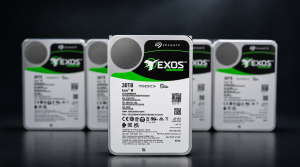
When you plan an IT infrastructure refresh, choosing the right enterprise hard drives makes all the difference. Seagate Exos HDD models are purpose-built for demanding data centre storage environments. Unlike standard desktop drives, they handle heavy 24/7 workloads with ease.
Here is why partners rely on Seagate Exos for business storage solutions:
-
High-capacity storage: Pack more terabytes into every rack unit to save physical space and power.
-
High-performance storage: Maintain consistent read and write speeds for big data storage and AI data storage.
-
Cloud storage infrastructure: Scale seamlessly across public, private, and hybrid cloud environments.
-
Reliable data storage: Built-in enterprise features protect data integrity and reduce drive failure rates.
Consequently, you spend less time troubleshooting hardware and more time growing your managed services.
Ready to spec out your next project? Visit Bluechip IT’s Seagate Exos page today. Our local team helps you with product selection, technical expertise, and fast Australian logistics.
Practical Steps for Your Next Storage Upgrade
A smooth storage expansion starts well before the drives arrive on site. By following a clear checklist, you can avoid costly downtime for your clients.
First, audit their current data storage solutions and growth trends. Look at how much capacity they used over the past twelve months. Next, match the enterprise HDD tier to their actual workloads. Archival data has very different speed needs compared to active AI data storage or virtualised environments.
Finally, factor in future scalability. Choosing high-density Seagate Exos drives now leaves room for growth without needing extra server racks later. As a result, your clients get better long-term value from their enterprise storage investment.
Turn Storage Upgrades into Long-Term Value
Planning a storage upgrade does not have to be complicated. By understanding your clients’ data growth, choosing purpose-built Seagate Exos drives, and mapping out capacity early, you set their IT infrastructure up for long-term success. You also position your business as a trusted advisor rather than just a hardware supplier.
If you want local stock, competitive pricing, and dedicated channel support, reach out to our team at https://www.bluechipit.com.au/seagate-exos before you quote your next job.