Cyber threats no longer wait for permission. Instead, they slip through unnoticed gaps in endpoint security. Many organisations still rely on reactive tools. However, those tools often miss modern attacks like ransomware and fileless malware. As a result, endpoints remain one of the weakest links in any environment.
At the same time, partners face rising expectations. Clients now demand stronger endpoint protection, better visibility, and proactive defence. Therefore, resellers must move beyond traditional approaches and adopt smarter security endpoint solutions.
This is where Application Control, Allowlisting, and Zero Trust come in. These strategies shift security from reactive to proactive. They also help partners deliver more reliable endpoint security services.
At Bluechip IT, we work closely with partners to provide access to leading cybersecurity vendors, including ThreatLocker. In this guide, you will learn how these technologies work together and how you can use them to strengthen endpoint security solutions. Keep reading to explore how you can elevate your offerings and stay ahead of modern threats.

Why Endpoint Security Needs a New Approach
Endpoint threats continue to grow in both volume and complexity. According to IBM’s Cost of a Data Breach Report 2023, the average cost of a breach reached USD 4.45 million.
This highlights a clear issue. Traditional endpoint protection is no longer enough.
Many legacy tools rely on signatures. However, modern attacks often bypass these controls. In addition, remote work has expanded the attack surface. Devices now connect through various networks and access shared systems.
Moreover, the use of endpoint management software and network storage adds further risk. Without proper control, sensitive data can move freely across environments.
Therefore, partners must adopt stronger endpoint security solutions. A proactive model is now essential.
What is Application Control in Endpoint Security?
Application Control focuses on managing what can run on an endpoint. Instead of reacting to threats, it prevents unknown applications from executing. This approach improves endpoint control and visibility. It also reduces reliance on traditional antivirus tools.
Unlike basic endpoint protection, Application Control enforces strict rules. Only trusted applications are allowed. As a result, malicious files cannot run. For partners, this creates a stronger security foundation. It also supports modern security endpoint solutions that prioritise prevention.
Understanding Allowlisting for Stronger Endpoint Protection
Allowlisting takes Application Control further. It creates a list of approved applications. Only those applications can run within the environment.
In contrast, blocklisting attempts to stop known threats. However, new threats often slip through. Therefore, allowlisting offers a more secure approach.
This method reduces the attack surface significantly. It also ensures that unknown or untrusted software cannot execute.
For partners delivering endpoint security services, allowlisting provides clear value. It shifts security from detection to prevention. As a result, clients gain stronger protection and peace of mind.
What is Zero Trust and Why It Matters for Endpoints
Zero Trust follows a simple principle. Never trust, always verify.
This means every request must be validated. No device or user is trusted by default. As a result, endpoints receive stricter control.
When combined with Application Control and Allowlisting, Zero Trust becomes even more effective. Each layer reinforces the other.
For example, even if a device is compromised, strict controls limit what can run. This reduces the risk of lateral movement.
In modern endpoint management software strategies, Zero Trust is essential. It ensures consistent protection across all endpoints.
Key Capabilities for Advanced Endpoint Security Solutions
Application Control & Allowlisting
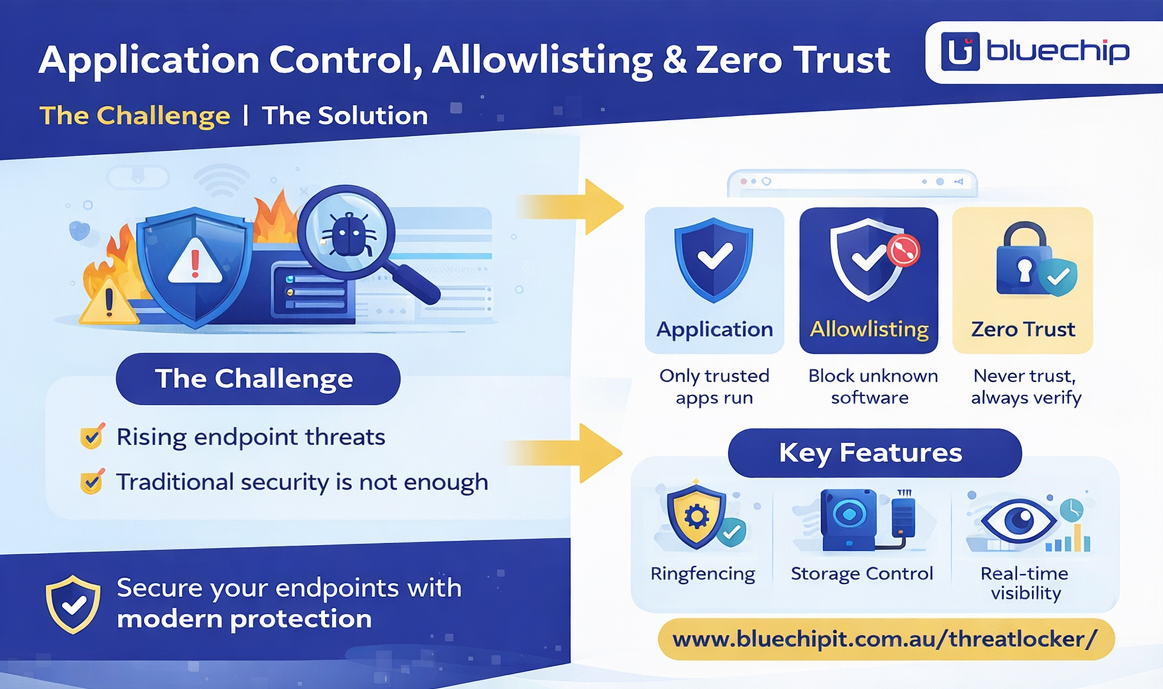
These controls ensure only approved applications can run. Therefore, unauthorised software is blocked immediately.
Ringfencing
Ringfencing limits how applications interact with system resources. It prevents misuse of trusted applications. In addition, it reduces the risk of exploitation.
Storage Control & Network Storage Protection
Storage Control manages USB devices and external drives. It also secures access to network storage. This is critical for protecting data across server and storage environments.
As many storage companies offer shared systems, risks increase. Therefore, proper controls are essential.
Endpoint Visibility & Management
Real-time monitoring improves visibility. It allows partners to detect unusual activity quickly. As a result, endpoint security service delivery becomes more proactive.
Looking to strengthen your endpoint security offerings? Explore our solutions and see how we can support your security strategy.
👉 Visit BluechipIT for Threatlocker Solutions
How ThreatLocker Supports Zero Trust Endpoint Security
ThreatLocker delivers a comprehensive approach to endpoint security. It combines several key capabilities into one platform.
First, it provides strong Application Control. Only approved applications can run.
Next, it enforces Allowlisting. This ensures unknown software is blocked by default.
In addition, Ringfencing limits application behaviour. It prevents misuse of trusted tools.
Storage Control also protects sensitive data. It manages access to external devices and network storage.
Together, these features support a Zero Trust model. Every action is verified. Nothing is assumed safe.
For partners, this creates a powerful security endpoint solution. It also helps deliver consistent endpoint protection across environments.
Partner Opportunity: Delivering Endpoint Security as a Service
Demand for managed endpoint security services continues to grow. Businesses want ongoing protection, not one-off solutions.
Therefore, partners can package endpoint protection with Zero Trust strategies. This creates recurring revenue opportunities.
In addition, advanced tools like ThreatLocker help partners stand out. They offer stronger security and better control.
As a result, partners can position themselves as trusted advisors. This leads to long-term client relationships.
Why Partner with Bluechip IT for Endpoint Security Solutions
Bluechip IT supports partners with access to leading vendors. This includes solutions like ThreatLocker. We also provide enablement and training. This helps partners build confidence in delivering endpoint security solutions.
In addition, our team offers pre-sales support. We help partners design and implement the right solutions. With strong distribution and local expertise, Bluechip IT helps partners scale their endpoint management software offerings effectively.
Getting Started with Application Control & Zero Trust
Start by reviewing your current endpoint security posture. Identify gaps in control and visibility.
Next, introduce Application Control gradually. This ensures a smooth transition.
Then, implement Allowlisting to strengthen protection. Combine this with Zero Trust principles.
Finally, work with trusted distributors like Bluechip IT. This ensures access to the right tools and support.

The Future of Endpoint Security
Endpoint security is shifting towards proactive defence. Reactive tools alone are no longer enough. Application Control and Allowlisting reduce risk significantly. Meanwhile, Zero Trust ensures consistent protection.
Together, these strategies form a strong security foundation. They also create new opportunities for partners. Those who adopt these approaches early will lead the market. They will also deliver better outcomes for their clients.
Ready to Strengthen Your Endpoint Security Offerings?
Build stronger protection with Application Control, Allowlisting, and Zero Trust strategies.
Partner with Bluechip IT to access leading solutions like ThreatLocker and grow your security portfolio.