Cyber threats continue to rise across Australian organisations. Many businesses now face ransomware, phishing, and credential theft daily. However, many organisations still struggle to prioritise the right security controls. With so many tools available, security teams often find it difficult to focus on the most effective protections.
For IT partners, this challenge creates an opportunity to guide customers toward proven security strategies. At Bluechip IT, we support partners with cybersecurity vendors that align with modern frameworks such as the Essential Eight cyber security model, including the ACSC Essential Eight and the Essential 8 ACSC framework. By providing access to trusted technologies, we help resellers strengthen Essential eight security for their customers.
In this article, we explore the key trends shaping Essential eight cyber security in 2026, including ransomware threats, identity-based attacks, MFA adoption, and the growing importance of endpoint protection. Let’s dive in!

Understanding the Essential Eight: The Cyber Security Framework from the ACSC
The Essential Eight is a cybersecurity framework created by the Australian Cyber Security Centre (ACSC). The ACSC forms part of the Australian Signals Directorate and provides national cybersecurity guidance.
The framework focuses on eight essential mitigation strategies, often referred to as the 8 essential controls, that help reduce common cyber attacks. These are also commonly known as ACSC mitigation strategies or ASC mitigation strategies.
Rather than offering complex theory, the model concentrates on practical protection steps. Because of this, many organisations adopt the Essential 8 ACSC cyber security framework as a baseline.
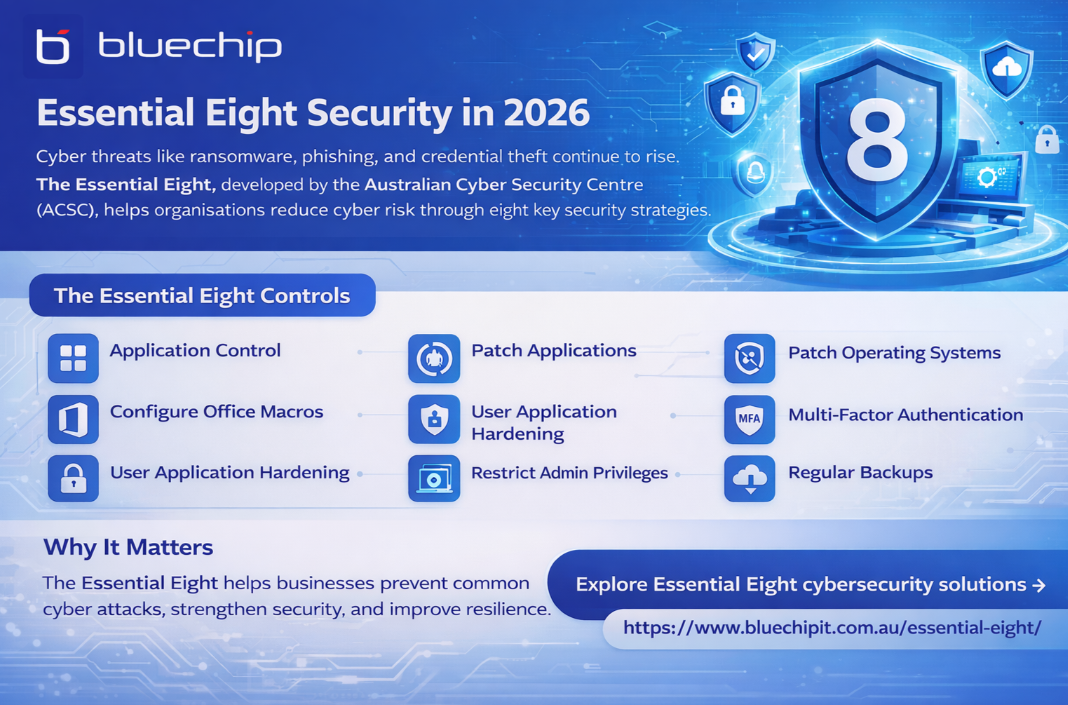
The Essential eight ACSC framework includes these controls:
- Application control
- Patch applications
- Configure Microsoft Office macro settings
- User application hardening
- Restrict administrative privileges
- Patch operating systems
- Multi-factor authentication
- Regular backups
Together, these ACSC mitigation strategies, sometimes referred to as ASC mitigation strategies, address the most common attack techniques used by cyber criminals.
As a result, organisations that implement Essential eight cyber mitigation strategies can significantly reduce their exposure to cyber threats.
Cybersecurity Trends Driving the Adoption of the Essential Eight
Several cybersecurity trends now drive organisations toward Essential eight security frameworks.
First, ransomware continues to grow rapidly. Attackers now target organisations of every size. Many groups operate like professional businesses. According to the ACSC Annual Cyber Threat Report 2022–23, the centre received over 94,000 cybercrime reports in Australia, with a report submitted roughly every six minutes. This means a cybercrime report occurs roughly every six minutes.
Next, identity-based attacks continue to increase. Attackers frequently steal passwords through phishing or credential leaks. Because of this trend, organisations now prioritise multi-factor authentication within Essential eight cyber security strategies aligned with ACSC Essential 8 recommendations. Another growing priority involves backup and recovery protection. Ransomware groups often target backups first. Therefore, secure and isolated backups play a critical role in cyber resilience.
Finally, endpoint security continues to evolve. Modern endpoint platforms now combine prevention with threat detection. These developments push organisations to adopt the Essential 8 ACSC framework more seriously.
The Biggest Challenges Businesses Face with Essential Eight Implementation
Despite its benefits, Essential eight implementation still presents challenges for many organisations. Several practical issues slow progress.
Limited Visibility Across IT Environments
Many businesses operate hybrid environments with cloud services and remote users. These environments often create security blind spots. Without clear visibility, organisations struggle to enforce Essential eight cyber mitigation strategies.
Legacy Systems and Patch Management Issues
Older systems remain common in many organisations. Unfortunately, these systems often lack modern security support. Because of this, patch management becomes difficult. This problem directly affects several ASC mitigation strategies within the ACSC Essential Eight framework.
Identity and Access Management Gaps
Identity security remains one of the weakest areas in many environments. Users often reuse passwords across systems. Without stronger identity protection, organisations cannot fully implement the Essential eight cyber security framework.
Security Skills Shortages
Cybersecurity expertise remains limited across many industries. Smaller organisations often lack dedicated security teams. As a result, many companies rely on partners to guide Essential eight implementation.
Bluechip IT supports partners with cybersecurity vendors aligned with Essential eight cyber mitigation strategies. Explore solutions that help address Essential Eight security requirements.
Explore Cybersecurity Solutions >>
What the Essential 8 Means for MSPs and IT Resellers
The growing focus on Essential 8 ACSC cyber security creates clear opportunities for MSPs and IT resellers. Many organisations now ask their IT providers about Essential eight security frameworks and how they align with the ACSC Essential Eight. They want to understand how their current systems compare with Essential 8 ACSC recommendations.
Partners can start by offering security posture assessments. These assessments help identify gaps in patching, identity protection, and endpoint security. Afterwards, partners can recommend technologies that support Essential eight cyber mitigation strategies and other ACSC mitigation strategies. Over time, these services often grow into long-term security engagements.
Consequently, the Essential 8 framework often becomes a foundation for broader cybersecurity services.
How Partners Can Support Clients with Essential Eight Security
Partners can support customers by aligning solutions with the Essential eight cyber security model.
- Endpoint and Application Control Solutions: Endpoint protection tools help prevent unauthorised software from running on systems.
- Multi-Factor Authentication and Identity Security: Strong identity platforms enable MFA, which blocks many credential-based attacks.
- Patch and Vulnerability Management: Automated patch management tools help organisations fix vulnerabilities faster.
- Backup and Recovery Solutions: Secure backup platforms allow businesses to recover quickly after ransomware incidents.

Why the Essential Eight Is Becoming a Key Cybersecurity Standard in Australia
The Essential eight cyber security framework continues to gain traction across Australian organisations. Government agencies already follow the framework. Meanwhile, many private organisations adopt it voluntarily.
Cyber insurance providers also review cybersecurity controls before issuing policies. Because of these pressures, businesses now prioritise Essential 8 security strategies. For partners, this shift creates long-term opportunities to guide clients toward stronger cyber resilience.
Strengthening Cyber Security with the Essential Eight
Cyber threats will continue to evolve. However, structured frameworks help organisations focus on the right controls. The Essential Eight cyber security framework offers practical guidance for reducing common cyber risks.
For IT partners, the framework also creates opportunities to deliver meaningful security improvements. By supporting Essential eight implementation, partners can help organisations strengthen protection and improve resilience.
Bluechip IT works closely with cybersecurity vendors that support ACSC mitigation strategies and Essential eight security initiatives.
Support Your Clients with Essential Eight Cyber Security Solutions
Bluechip IT helps partners deliver cybersecurity solutions that align with the Essential Eight cyber security framework. Strengthen client protection while expanding your cybersecurity portfolio.